
CHRISTMAS DINNER PLANNING GUIDE
How to Plan a Christmas Dinner Party
A complete step-by-step guide to planning a warm and memorable Christmas dinner.
From the guest list and invitations to the menu, table setting, decorations and the big day itself — this guide will help you plan a beautiful Christmas dinner with ease, so you can spend less time worrying and more time enjoying what truly matters: being together with family and loved ones.

-
Practical
Step-by-Step Tips -
Beautiful
Inspiration -
Helpful
Checklists -
More Time for
What Matters
CHRISTMAS DINNER PLANNING CHECKLIST
Plan Your Christmas Dinner Step by Step
A memorable Christmas dinner becomes much easier to plan when you know what needs to happen and when. Use this quick overview to work through the essentials or jump directly to the part of the guide you need.
From the guest list and dinner style to the menu and Christmas Day timeline, every step is here to help you stay organized and enjoy the celebration too.

Planning Basics
Choose the date, create your guest list, set the budget and decide where to host.
Jump to Planning Basics →Choose Your Christmas Dinner Style
Find a look that feels right, from traditional Christmas to elegant gold, greenery or modern styling.
Explore Dinner Styles →Invitations, Table Setting & Decorations
Coordinate invitations, place settings and festive details for one cohesive Christmas look.
Plan the Details →Plan the Christmas Dinner Menu
Organize appetizers, mains, sides, desserts and drinks without creating unnecessary last-minute stress.
Plan the Menu →Hosting & Christmas Day Timeline
Know what to prepare ahead and how to keep Christmas Day running smoothly.
See the Timeline →Final Christmas Dinner Checklist
Make sure the table, food, decorations and final preparations are ready before your guests arrive.
View the Final Checklist →Christmas Dinner FAQ
Find answers to common questions about planning, preparing and hosting Christmas dinner.
Read the FAQ →Christmas Dinner Collections
Explore coordinated Christmas dinner invitations, menu designs, place cards and matching details.
Explore the Collection →CHRISTMAS DINNER PLANNING BASICS
Planning Basics
Start with the essentials to create a Christmas dinner that feels relaxed, enjoyable and truly special.
Getting the basics right makes everything else easier. Start by choosing a date that works for your guests, creating a realistic guest list, setting a comfortable budget and deciding where the dinner will take place. These early choices shape everything from your menu and seating plan to the atmosphere of the celebration.

Choose a Date
Find a date and time that work for your family and guests while considering travel, other celebrations and holiday commitments.
Jump to section →Create Your Guest List
Decide who to invite and think about children, relatives, seating needs and any special requirements.
Jump to section →Set Your Budget
Plan a realistic budget for food, drinks, tableware, decorations, gifts and other extras.
Jump to section →Choose a Location
Decide whether to host at home or elsewhere and consider space, seating, accessibility and atmosphere.
Jump to section →Quick Tip
Start early and keep it simple.
You do not need a complicated plan to host a beautiful Christmas dinner. A clear date, realistic guest list, manageable budget and suitable location will give you a strong foundation for everything that follows.
A well-organized Christmas dinner is a more enjoyable Christmas dinner.
Choosing the Right Date
Choosing the right date is one of the first decisions that shapes the rest of your Christmas dinner planning. Think about when your closest family members are available, whether guests need to travel and what other holiday commitments may already be on the calendar.
For many families, Christmas Eve, Christmas Day or a nearby weekend are the obvious choices, but the best date is simply the one that allows the people who matter most to be there without creating unnecessary stress.
- Guest availability
- Travel time
- Children’s schedules
- Other family celebrations
- Religious or cultural traditions
- Meal preparation time
- Whether guests are staying overnight
Tip: Confirm the date with your most important guests before sending invitations or making non-refundable plans.

Building Your Guest List
Your guest list affects almost every other part of the dinner, including seating, food quantities, table size and budget. Start with the people you most want to celebrate with, then make sure the size of the group fits comfortably in the space you plan to use.
Think beyond the number of guests. Consider whether children need high chairs or simpler meals, whether older relatives require easier access and whether anyone has allergies, dietary restrictions or other needs that should influence your planning.
- Adults and children
- Available seating
- High chairs or booster seats
- Dietary restrictions
- Accessibility needs
- Overnight guests
- Plus-ones or extended family
Tip: Make a final headcount before buying food, arranging seating or printing place cards.

Planning Your Budget
A clear budget helps you make decisions without turning the celebration into a source of stress. Decide roughly how much you are comfortable spending, then divide that amount between the parts of the dinner that matter most to you.
Typical costs can include:
- Food
- Drinks
- Tableware
- Decorations
- Flowers or greenery
- Invitations and stationery
- Small gifts or favors
- Additional chairs, linens or serving pieces
Not every category needs a large budget. Use what you already own where possible and spend more on the details that genuinely improve the experience.
Tip: Build a small buffer into your budget for last-minute groceries or forgotten essentials.

Choosing the Perfect Location
The best location is not necessarily the biggest or most formal one. It is the place where your guests can sit comfortably, move around easily and enjoy the meal without making hosting unnecessarily difficult.
For many families, home is the natural choice because it feels personal and relaxed. If your guest list is larger than your available space, however, a relative’s home, private dining room or rented venue may be worth considering.
If hosting at home, think about:
- Dining-table capacity
- Extra chairs
- Serving space
- Kitchen access
- Coat storage
- Space for children
- Accessibility
- Parking
- Where gifts or desserts will be placed
Tip: Set up the table and chairs in advance so you can confirm that everyone fits comfortably before the day of the dinner.

CHRISTMAS DINNER STYLES
Choose Your Christmas Dinner Style
Set the tone for a memorable celebration with a style that suits you and your guests.
Your Christmas dinner can be as traditional or as modern as you like. Whether you picture a classic festive feast, an elegant sit-down dinner, a relaxed family gathering or something completely different, choosing the right style helps you plan the menu, table setting, decorations and atmosphere with confidence.

Traditional Feast
A classic Christmas dinner with familiar dishes, family traditions and a warm festive atmosphere.
Jump to section →Elegant & Formal
A refined sit-down dinner with polished table settings, thoughtful details and a sophisticated atmosphere.
Jump to section →Relaxed & Informal
A cosy and casual gathering focused on good food, easy conversation and spending time together.
Jump to section →Alternative Ideas
From buffets and sharing tables to themed dinners and smaller gatherings, there are many ways to celebrate.
Jump to section →Quick Tip
Choose a style that feels right for you.
There is no single “perfect” way to host a Christmas dinner. The best style is the one that suits your guests, your personality, your space and the kind of atmosphere you want to create.
The best Christmas dinners reflect the people around the table.
Traditional Feast
A traditional Christmas dinner is all about familiar dishes, family rituals and the comforting atmosphere that many people associate with the holidays. For some families, that means roast turkey or another centerpiece dish, classic sides, festive desserts and recipes that appear on the table year after year.
Tradition does not mean everything needs to be complicated. You can keep the menu focused on the dishes your family genuinely enjoys while still creating a warm and memorable celebration.
Key elements to consider:
- Traditional family recipes
- Roast or centerpiece dish
- Familiar side dishes
- Classic table setting
- Festive greenery and candles
- Family traditions
- Multi-course or simplified menu
- Wine and drink pairings
Tip: Keep the traditions your family loves, but do not be afraid to simplify or add your own personal touches.

Elegant & Formal
An elegant Christmas dinner works well when you want the occasion to feel more polished and special. This style is less about making everything expensive and more about creating a thoughtful, coordinated atmosphere.
A carefully set table, good glassware, candles, coordinated stationery and a well-planned menu can make the evening feel refined without making it uncomfortable or overly formal.
Key elements to consider:
- Multi-course menu
- Fine tableware and glassware
- Elegant Christmas decorations
- Coordinated place settings
- Menu cards or place cards
- Ambient lighting
- Thoughtful seating arrangement
- Optional dress code
Tip: Focus on a few high-impact details such as beautiful lighting, coordinated tableware and a strong centerpiece instead of trying to make every detail elaborate.

Relaxed & Informal
A relaxed Christmas dinner is ideal when your priority is spending time together rather than following a formal schedule. The food can be served family-style, as a buffet or with sharing dishes placed in the center of the table.
This approach often works especially well for larger families, homes with children or gatherings where people arrive and leave at slightly different times.
Key elements to consider:
- Buffet or family-style food
- Sharing dishes
- Simpler menu
- Casual table settings
- Comfortable seating
- Flexible serving times
- Child-friendly options
- Dishes that can be prepared ahead
Tip: Choose dishes that can be prepared in advance so you can spend more time with your guests and less time in the kitchen.

Alternative Ideas
A Christmas dinner does not have to follow the traditional sit-down format. If your family prefers something different, there are plenty of ways to create a festive gathering that still feels special.
The right alternative depends on your guest list, available space and how much preparation you want to take on. A buffet, grazing table or casual themed dinner can work especially well for larger or more flexible gatherings.
Ideas to consider:
- Buffet-style dinner
- Family potluck
- Cocktail dinner
- Christmas brunch or lunch
- Grazing table
- Themed dinner
- International menu
- Outdoor or fireplace gathering
- Dessert-focused celebration
- Small and intimate dinner
- Rented venue
- Non-traditional menu
Tip: Choose an idea that reflects your family and the atmosphere you want to create rather than trying to recreate someone else’s Christmas tradition.

INVITATIONS, TABLE SETTINGS & DECORATIONS
Invitations, Table Setting & Christmas Decorations
Set the scene for a beautiful Christmas dinner with thoughtful details that bring everything together.
From the first invitation your guests receive to the place cards, menu details and decorations they see when they arrive, every element helps shape the atmosphere of your Christmas dinner.
A coordinated approach does not mean every detail needs to match perfectly. The goal is to create a celebration that feels intentional, welcoming and visually connected from beginning to end.
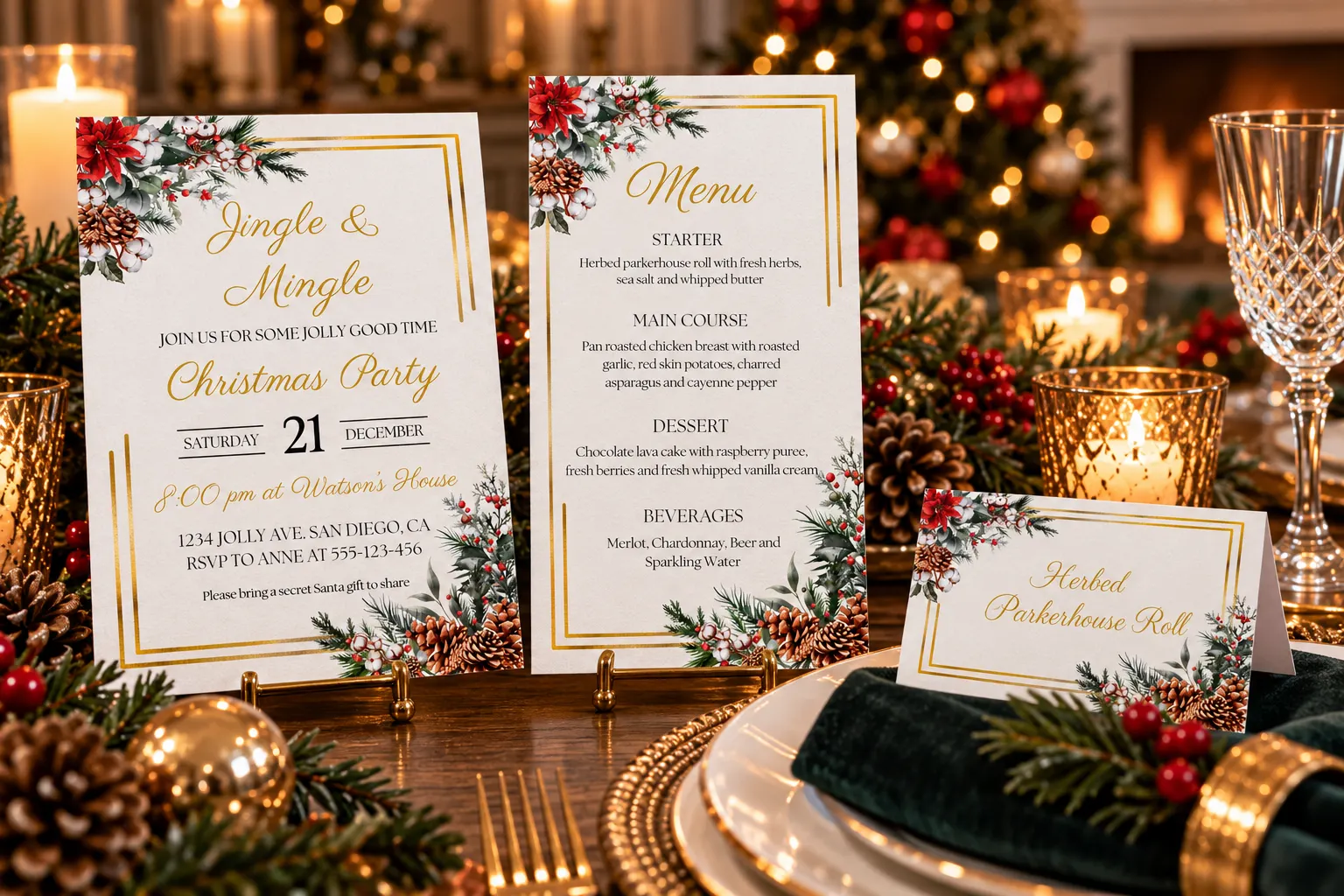
Invitations
Set the tone early with an invitation that reflects the style and atmosphere of your Christmas dinner.
Jump to section →Table Settings
Create a festive table with coordinated place settings, menu cards, place cards and thoughtful details.
Jump to section →Decorations
Use greenery, candles, signs and festive accents to make the space feel warm and welcoming.
Jump to section →Themes & Colour Ideas
Choose a colour palette or theme that connects your stationery, table and decorations.
Jump to section →Quick Tip
Small details make a big difference.
You do not need to decorate every surface or use every possible piece of stationery. A few thoughtful details — such as candles, greenery, a coordinated menu card or a simple place card — can make the entire dinner feel more polished.
A beautifully set table brings people together.
Invitations
Your Christmas dinner begins before guests arrive. The invitation gives them their first impression of the celebration and helps communicate the date, time, location and overall style of the evening.
Whether you choose a printed or digital invitation, keep the essential information easy to find and make sure the design reflects the kind of dinner you are planning.
Useful details to include:
- Date
- Start time
- Location
- RSVP details
- Dress code if relevant
- Whether guests should bring anything
- Special instructions
- Meal or event expectations if necessary
Tip: Send invitations early enough that guests can plan around other holiday commitments, especially if travel is involved.
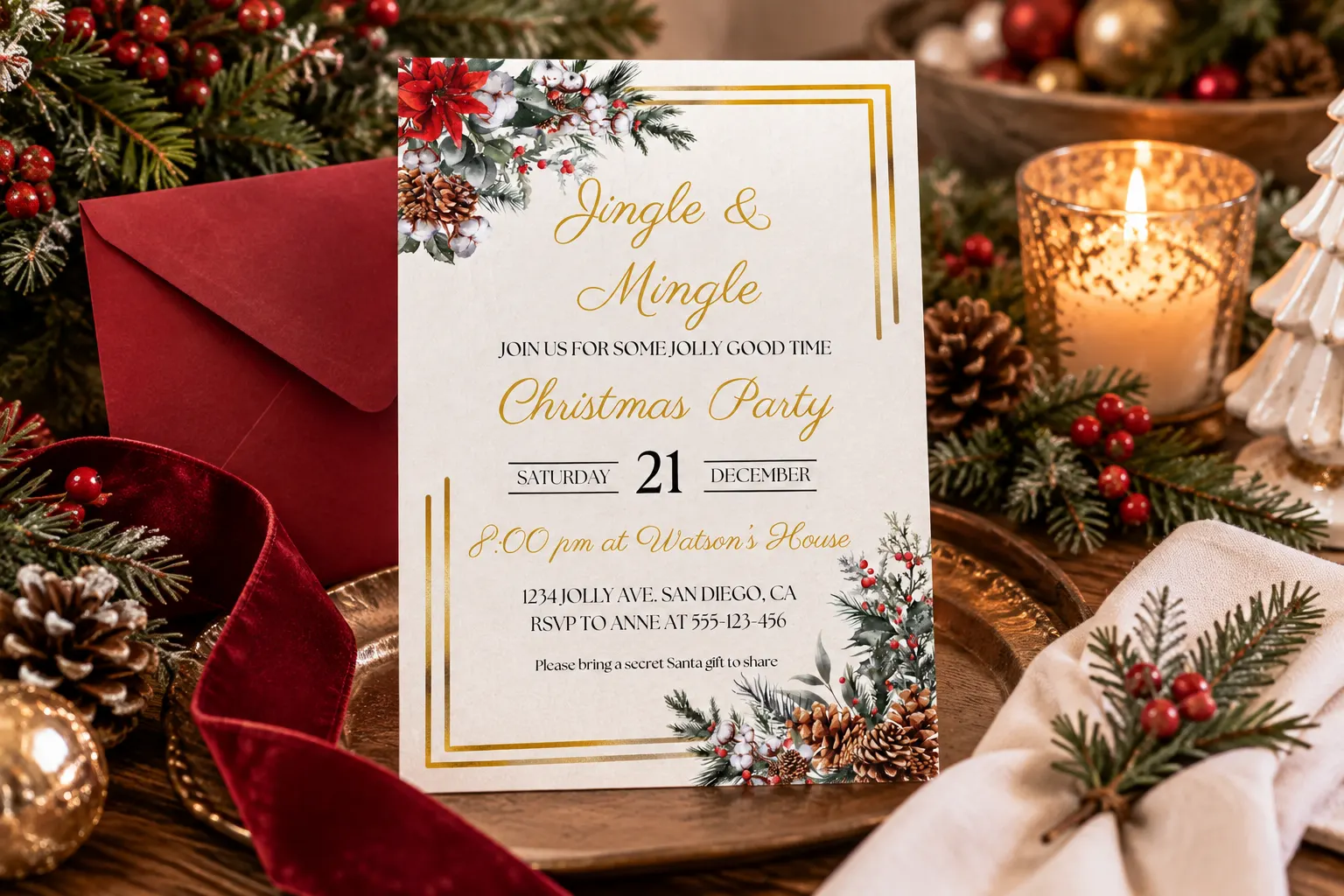
Table Settings
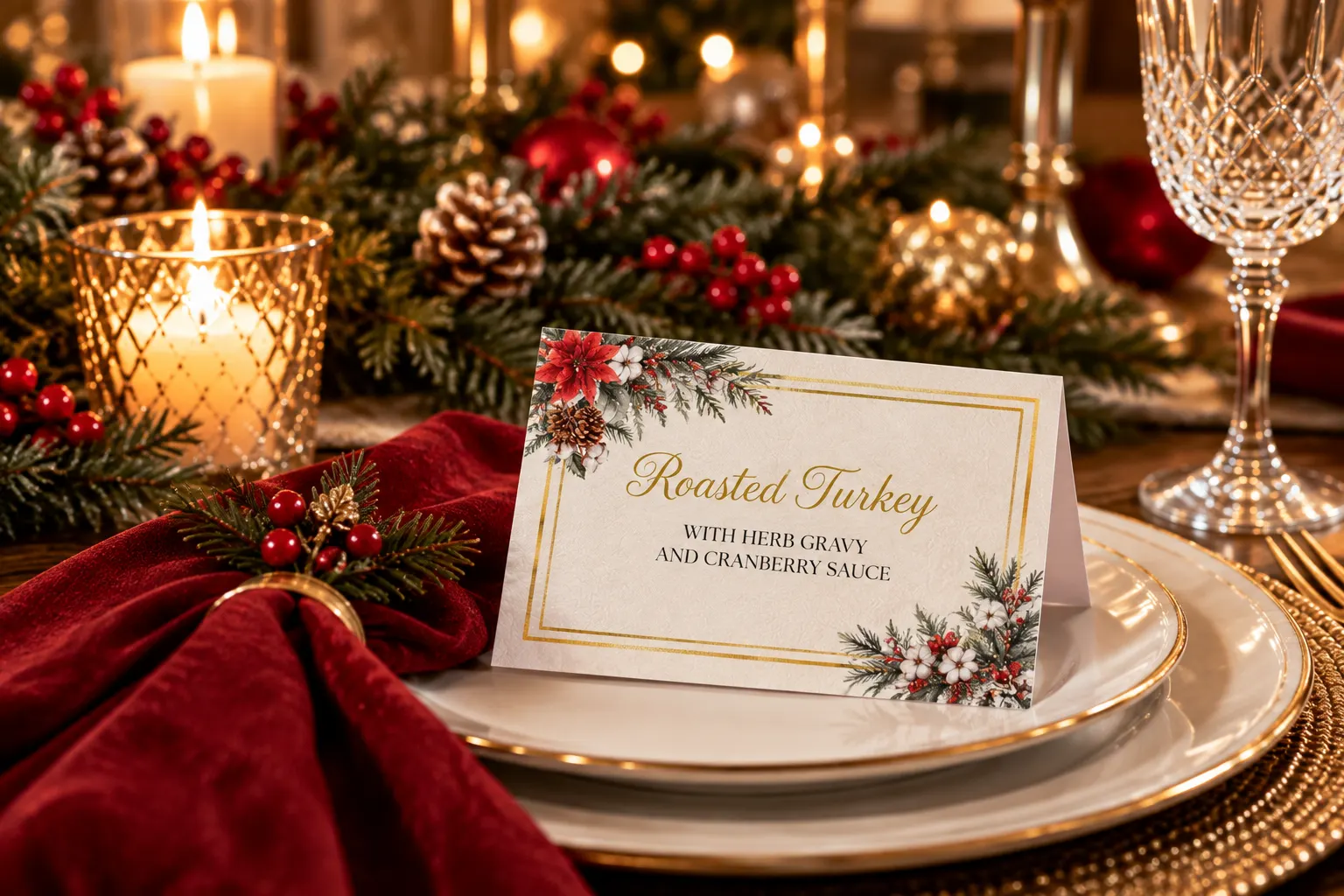
A thoughtful table setting can make even a simple Christmas dinner feel special. Start with the pieces you already own, then add a few coordinated details that help bring the table together.
Your table does not need to be formal. What matters most is that guests have enough space and that the table feels practical, comfortable and festive.
Ideas to consider:
- Plates and serving pieces
- Glassware
- Napkins and napkin rings
- Placemats or table runner
- Menu cards
- Place cards
- Candles
- Greenery
- Small decorative details
- A centerpiece that does not block conversation
Tip: Keep taller decorations away from the direct line of sight between guests so conversation stays easy.
Decorations
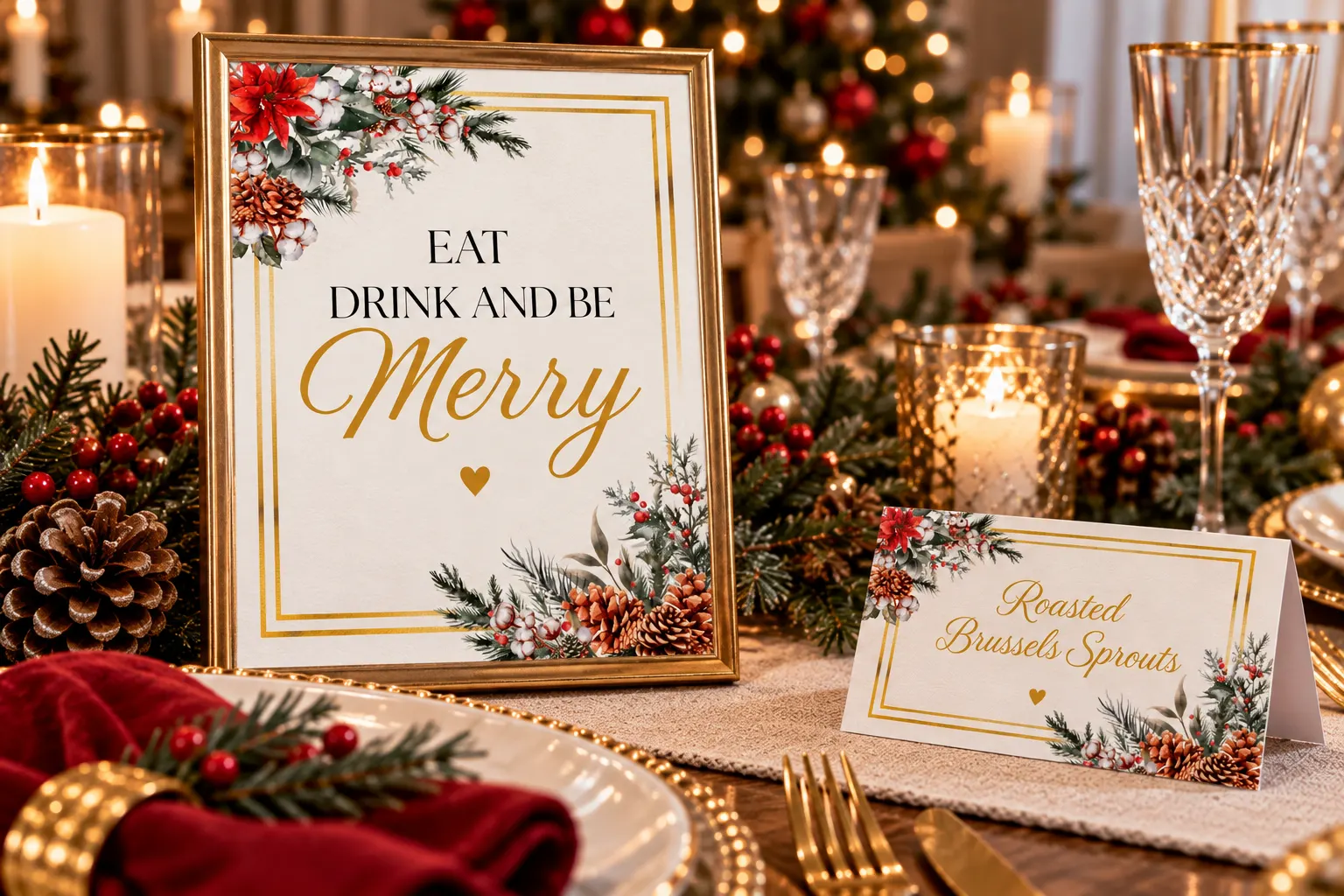
Christmas decorations help create the atmosphere around the dinner, but you do not need to decorate every corner of the room.
Focus on the places guests will notice most: the dining table, entrance, serving area and nearby living space.
A few repeated elements can make the whole setting feel intentional.
Ideas to consider:
- Christmas tree
- Garlands and wreaths
- Candles and lanterns
- Fairy lights
- Greenery
- Pinecones
- Red berries
- Welcome sign
- Small table signs
- Festive serving area
- Simple seasonal flowers
- Decorative accents around the entryway or fireplace
Tip: Repeat two or three visual elements throughout the space — for example greenery, gold accents and warm candlelight — instead of using too many unrelated decorations.
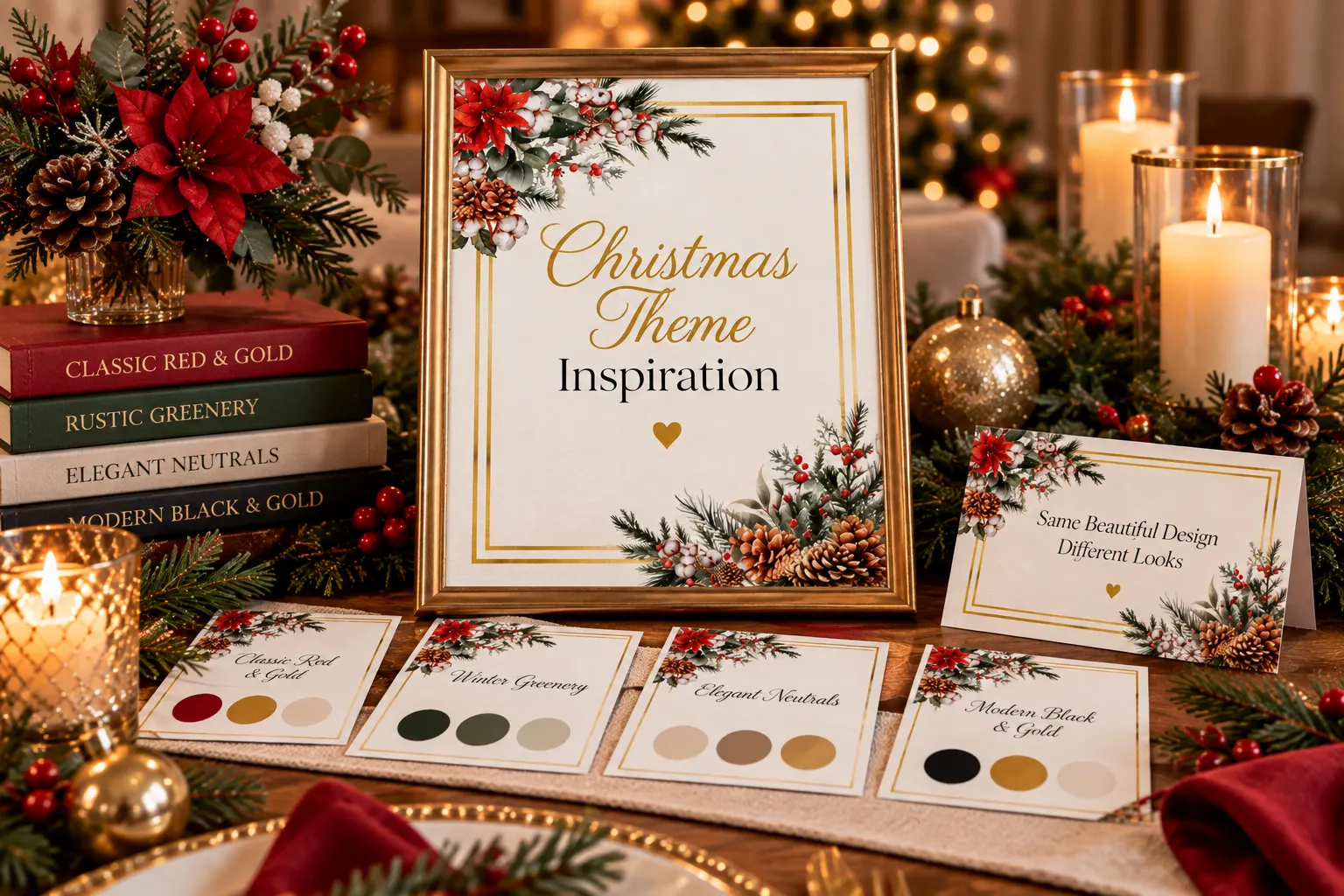
Themes & Colour Ideas
Choosing a simple colour palette can make your invitations, table setting and decorations feel naturally connected.
You do not need to match every detail exactly. Repeating the same two or three main colours across stationery, linens, candles, greenery and decorative accents is usually enough to create a cohesive look.
Popular Christmas directions include:
- Classic red and gold
- Traditional red and green
- Greenery and warm gold
- Elegant gold and white
- Black and gold
- Winter white and silver
- Natural greenery and wood tones
- Muted neutrals
- Nutcracker-inspired colours
- Modern minimal styling
Tip: Choose two or three main colours and let those guide your stationery, table setting and decorations throughout the room.
CHRISTMAS DINNER MENU PLANNING
Plan the Christmas Dinner Menu
Delicious food brings everyone together and makes your Christmas dinner truly memorable.
A well-planned menu helps your Christmas dinner feel relaxed, enjoyable and manageable. Start by thinking about how many courses you want to serve, which dishes can be prepared in advance and what your guests will genuinely enjoy.
You do not need an enormous menu to create a special celebration. A few well-chosen dishes, balanced with sides, dessert and drinks, are often more enjoyable than trying to prepare too much.

Menu Planning
Build a balanced menu with starters, a main course, side dishes, dessert and drinks.
Jump to section →Traditional Dishes
Choose classic Christmas favourites and family traditions that make the meal feel special.
Jump to section →Dietary Considerations
Plan for allergies, preferences and different dietary needs so everyone can enjoy the meal.
Jump to section →Drinks & Pairings
Choose wine, festive drinks and non-alcoholic options that complement the menu.
Jump to section →Quick Tip
Plan ahead for a more relaxed day.
Write your menu and shopping list early, then identify which dishes or components can be prepared in advance. The more you can do before the day itself, the more time you will have to enjoy Christmas with your guests.
Good food creates joyful moments.
Menu Planning
Start by deciding how many courses you would like to serve and what style of dinner suits your celebration. A traditional sit-down dinner might include a starter, main course, sides and dessert, while a more relaxed gathering could be a buffet or sharing-style meal.
Consider your cooking time, oven space and what can be prepared in advance. Keeping the menu realistic will help you enjoy the day as much as your guests do.
Tip: Plan your menu around what can be prepared ahead of time to reduce stress on the day.

Traditional Dishes
Many Christmas dinners feature beloved classics such as roast turkey, glazed ham, stuffing, roast potatoes, seasonal vegetables and rich gravy. These traditional dishes bring a sense of familiarity and comfort to the table.
You can also add a personal touch by including family favourites or regional specialties that are meaningful to you.
Tip: Choose a few classic dishes as the foundation and add one or two personal favourites to make the menu your own.

Dietary Considerations
When planning your menu, consider any dietary requirements or preferences your guests may have, such as vegetarian, vegan, gluten-free or dairy-free options.
Including a variety of dishes ensures that everyone feels welcome and can enjoy the meal. It can also be helpful to clearly label dishes if you are serving a buffet.
Tip: Ask guests about dietary requirements in advance so you can plan with confidence.

Drinks & Pairings
The right drinks can complement your menu and add to the festive atmosphere. Consider serving a signature welcome drink, a selection of wines and non-alcoholic options.
If you are serving multiple courses, you might like to pair wines with the main dishes or keep things simple with a few crowd-pleasing choices.
Tip: Include a mix of alcoholic and non-alcoholic drinks so there is something for everyone.

HOSTING & CHRISTMAS DAY
Hosting the Dinner + Christmas Day Timeline
With a little preparation, you can enjoy a relaxed and well-organised Christmas Day.
A clear plan helps everything run more smoothly, from the final preparations in the kitchen to welcoming your guests and sitting down to enjoy the meal together.
The goal is not to schedule every minute perfectly. A simple timeline, a few practical hosting habits and some flexibility can help you feel prepared without turning Christmas Day into a checklist.

Hosting Tips
Practical ideas for welcoming guests and creating a warm, relaxed atmosphere.
Jump to section →Christmas Day Timeline
A simple schedule to help you manage preparations, dinner and time with your guests.
Jump to section →Keeping Guests Happy
Small touches that help everyone feel comfortable, included and welcome.
Jump to section →After the Dinner
Ideas for winding down, handling leftovers and ending the celebration on a relaxed note.
Jump to section →Quick Tip
Plan ahead, but leave room for flexibility.
A timeline helps you stay organised, but Christmas Day rarely goes exactly to plan. Prepare as much as you can in advance, then allow a little extra time between key moments so you can enjoy the day as it unfolds.
It’s the people that make it special.
1
Hosting Tips
A few thoughtful touches can help your guests feel welcome and make the day run more smoothly. Focus on creating a comfortable, organised atmosphere that is easy for everyone to enjoy.
- Tidy the main areas guests will use
- Set the table and prepare serving pieces in advance
- Organise a place for coats, bags and gifts
- Prepare welcome drinks and simple nibbles
- Check seating and introduce guests who may not know each other
- Light candles and add quiet background music shortly before arrival
Tip: The best hosting does not have to be complicated. A warm welcome, good food and a few thoughtful details go a long way.

2
Christmas Day Timeline
A simple timeline helps you keep track of the day without constantly watching the clock. Treat this as a flexible example and adjust it for your guest list, menu and traditions.
- 08:00 Final preparations and cooking
- 10:00 Prepare cold dishes, desserts and serving pieces
- 11:00 Set the table and prepare drinks
- 12:00 Finish dishes that need oven or stovetop time
- 13:00 Welcome guests
- 13:30 Serve a starter or welcome drinks if planned
- 14:00 Christmas dinner
- 15:30 Dessert, coffee and drinks
- 16:30 Relax, exchange gifts or enjoy family time
- Later Games, films, conversation or a casual evening snack
Tip: Adjust the timings to suit your menu, number of guests and preferred pace. Add a little extra time wherever possible.

3
Keeping Guests Happy
Christmas is about spending time with the people who matter. A little thought and flexibility can help everyone feel comfortable and included throughout the celebration.
- Consider different ages, dietary needs and family traditions
- Provide non-alcoholic drinks and keep water easy to reach
- Offer comfortable seating and a quieter place for short breaks
- Serve food at a comfortable pace without long waits
- Keep music low enough for easy conversation
- Have a few simple activities available for children
Tip: Small gestures, such as preparing a favourite dish, remembering dietary needs or providing a comfortable seat, can make guests feel genuinely welcome.

4
After the Dinner
Once the main meal is over, there is no need to rush into clearing everything immediately. Give guests time to relax, continue conversations and enjoy the atmosphere.
- Serve coffee, tea or the remaining dessert
- Move to the living room, open gifts or enjoy a family activity
- Refrigerate food promptly and keep storage containers ready
- Send safely stored leftovers home with guests if you wish
- Thank guests and help organise coats, bags and gifts
- Leave non-essential cleaning until everyone has gone home
Tip: The final part of the evening should feel relaxed. Most of the cleaning can wait until everyone has gone home.

FINAL CHECKLIST + FAQ
You’re Ready for Christmas Dinner
Everything You Need for a Relaxed and Memorable Christmas Dinner
You have chosen the date, planned the guest list, decided on your dinner style, organised the invitations and decorations, built your menu and thought through the flow of Christmas Day.
Before your guests arrive, use this final checklist to make sure the essentials are covered. Then review the frequently asked questions for a few practical reminders that can help you feel prepared without adding unnecessary last-minute tasks.
You do not need a perfect Christmas dinner. Good food, a welcoming table and time with the people you care about matter far more than getting every detail exactly right.

The best Christmas dinner is not the one with the most elaborate menu or decorations — it is the one where everyone, including the host, has time to enjoy being together.
FINAL CHECKLIST
Your Christmas Dinner Checklist
Use this as a final review, not another list of things you need to add. If the essentials are covered and your plan works for your home, your guests and your schedule, you are ready.
Planning & Guests
- Date and time confirmed
- Guest list finalised
- RSVPs reviewed
- Guest numbers updated
- Dinner style chosen
- Arrival information shared if needed
Invitations & Table Details
- Invitations sent if needed
- Table setting planned
- Place cards prepared if using them
- Menu cards prepared if using them
- Welcome sign ready if using one
- Decorations and candles prepared
Menu & Shopping
- Christmas dinner menu finalised
- Shopping list completed
- Main dish confirmed
- Side dishes planned
- Dessert planned
- Ingredients checked before final shopping
Dietary Needs & Drinks
- Dietary requirements confirmed
- Allergies checked
- Suitable alternatives prepared
- Alcoholic drinks planned if serving them
- Non-alcoholic options available
- Water, coffee and tea available
Kitchen & Hosting
- Serving dishes and utensils ready
- Fridge and oven space considered
- Make-ahead dishes prepared where possible
- Christmas Day timeline reviewed
- Coats, bags and gifts have a place
- Music, lighting and room temperature considered
Christmas Day & After Dinner
- Final cooking schedule feels realistic
- Table can be set without rushing
- Leftover containers ready
- Coffee, dessert or after-dinner drinks planned
- Simple after-dinner activities available if wanted
- You have left room for the day to be imperfect
FREQUENTLY ASKED QUESTIONS
Christmas Dinner Planning FAQ
Here are answers to some of the most common questions people have when planning and hosting Christmas dinner.
For a small family dinner, a few weeks is usually enough to organise the guest list, menu and decorations. If you are hosting a larger group, coordinating travel or planning a more elaborate meal, starting four to six weeks ahead can make the process much more relaxed.
For an informal family gathering, confirming the date two to four weeks ahead is often enough. If guests need to travel, arrange accommodation or coordinate several holiday events, send the invitation or save-the-date earlier.
There is no required number. A balanced Christmas dinner might include one main dish, two or three sides, vegetables, bread and dessert. It is usually better to serve a manageable selection well than to prepare so many dishes that the host spends the entire day in the kitchen.
Ask guests about allergies, intolerances and dietary preferences before you shop. Try to include several dishes that naturally suit different needs, clearly identify suitable options and be especially careful about cross-contamination when a guest has a genuine food allergy.
Many desserts, sauces, cold dishes, vegetables and table-setting details can be prepared in advance. You can also organise serving dishes, set the table where practical, chill drinks and check your cooking schedule so Christmas Day involves fewer last-minute decisions.
There is no universal best time. Choose a time that suits your family traditions, travel plans and menu. Early or mid-afternoon is common for many families, while others prefer an evening meal. Work backwards from your preferred serving time when creating your cooking schedule.
Plan dishes around the oven and stovetop space you actually have. Use covered serving dishes, warmed plates and low oven temperatures where appropriate, and avoid cooking every dish so that it finishes at exactly the same moment. Some foods are better prepared slightly ahead than kept waiting too long.
Keep the menu realistic, prepare what you can in advance and accept help when it is offered. Choose some dishes that need little attention on the day itself, organise your kitchen before guests arrive and leave small gaps in the schedule so you can spend time with everyone.
Cool and refrigerate perishable food promptly and use clean storage containers. Label containers if useful, send suitable leftovers home with guests if you want to and only keep food that has been handled and stored safely.
Focus on atmosphere rather than quantity. Candles, greenery, music, a thoughtfully set table and a few coordinated details can make the meal feel festive without requiring expensive decorations or an enormous menu. Use what you already own wherever possible.
Create a Christmas Dinner That Feels Special
A memorable Christmas dinner is not about creating the most elaborate table or serving the largest menu. It is about creating a welcoming space where good food, thoughtful details and time together can turn an ordinary meal into a tradition people remember.
Whether your celebration is traditional, elegant or relaxed, choose the details that support the atmosphere you want. Coordinate the pieces that matter to you, keep the plan manageable and leave enough time to enjoy the people around your table.
- Choose a dinner style that feels right for your family
- Coordinate only the details that matter to you
- Create one or two beautiful focal points
- Keep the menu realistic for your kitchen and schedule
- Make guests feel welcome and comfortable
- Leave time to enjoy Christmas yourself
When the planning is finished, stop looking for more things to add. You have done enough — enjoy the dinner, the conversation and the memories you are creating.

READY TO CREATE YOUR CHRISTMAS DINNER?
Bring Your Christmas Dinner Together
Explore coordinated Christmas dinner designs created to help invitations, menus, place settings and decorations feel beautifully connected without making the planning more complicated.
YOU PLANNED THE DETAILS — NOW ENJOY CHRISTMAS TOGETHER